
The path ahead: after SCOTUS decision on tariffs, here’s what’s next
It’s a brave new world for the United States amid the Supreme Court’s decision to nix IEEPA tariff authority for the president…so what’s next?
Opinion-editorial by Summer Lane | February 20, 2026
Friday’s decision from the Supreme Court, which effectively struck down President Trump’s authority to levy tariffs on foreign countries under the International Emergency Economic Powers ACT (IEEPA), has shaken the confidence of the American people – but there is a clear path forward.
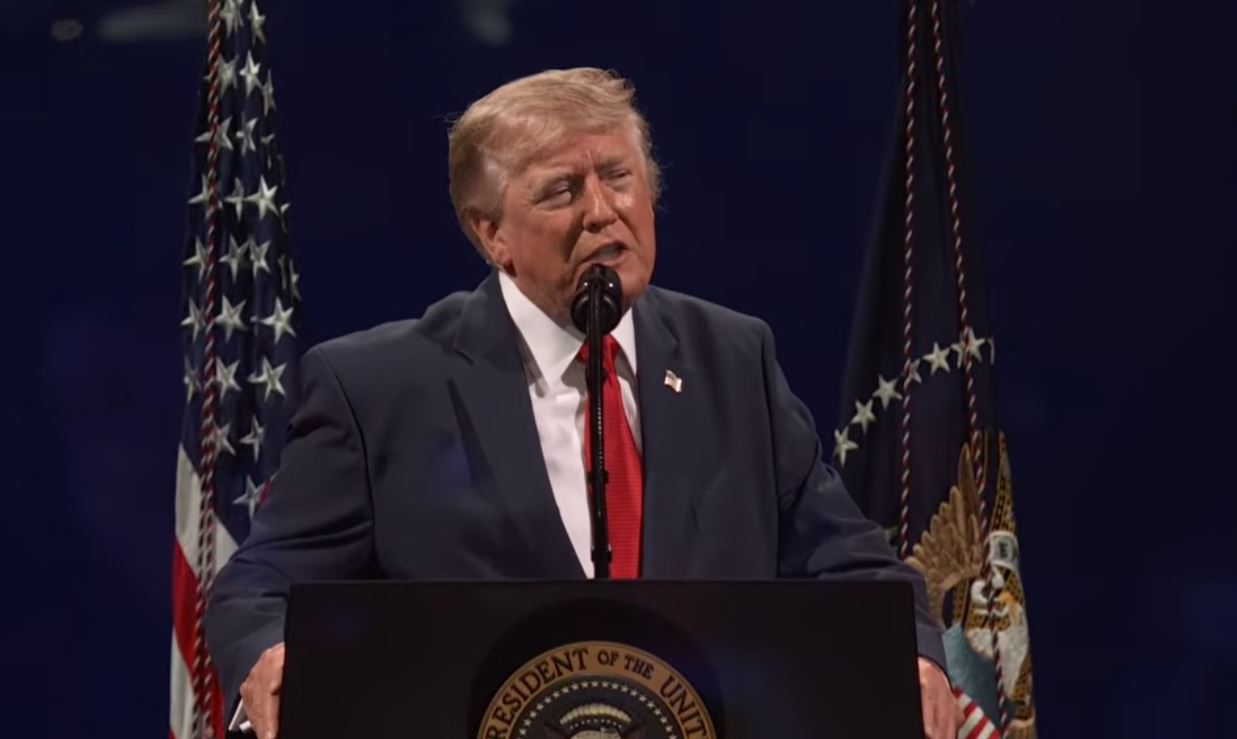
The president, while addressing the nation shortly after the decision, derided the six majority justices – he argued that they “incorrectly” nixed his administration’s interpretation of IEEPA – and additionally provided a framework for maintaining economic stability and continuing to leverage tariffs in trade policies with foreign nations.
As pointed out by SCOTUS Wire, the ruling on Friday was narrow: it applies only to tariffs imposed under the IEEPA, and does not invalidate those tariffs placed under other statutes like Section 232 or 301.
The president said during his remarks that those tariffs were still in place and will remain in place.
He also said that on Friday, he would sign an order to impose a 10 percent global tariff under Section 122 “over and above our normal tariffs already being charged.”
The long-awaited decision from SCOTUS, which defined taxation authority as a purely Congressional realm, has taken some heat from commentators and experts who may debate the definitions of taxation on domestic citizenry versus tariffs on foreign countries seeking to do business with the U.S.
“We claim no special competence in matters of economics or foreign affairs,” Chief Justice John Roberts wrote for the majority opinion. “We claim only, as we must, the limited role assigned to us by Article III of the Constitution. Fulfilling that role, we hold that IEEPA does not authorize the President to impose tariffs.”
In his thoughtful dissent, Justice Brett Kavanaugh argued, “Since the Founding, numerous statutes have authorized—and still do authorize—the President to impose tariffs and other foreign import restrictions. IEEPA merely allows the President to impose tariffs somewhat more efficiently to deal with foreign threats during national emergencies.”
Kavanaugh also explicitly outlined other statutes that could give the president the authority to levy tariffs upon foreign nations without “procedural steps” associated with the IEEPA. In theory, this could actually give the president more power, which is what President Trump’s overall point was on Friday.
Per Justice Kavanaugh’s dissenting opinion:
“Although I firmly disagree with the Court’s holding today, the decision might not substantially constrain a President’s ability to order tariffs going forward. That is because numerous other federal statutes authorize the President to impose tariffs and might justify most (if not all) of the tariffs at issue in this case—albeit perhaps with a few additional procedural steps that IEEPA, as an emergency statute, does not require.”
During his remarks on Friday, President Trump remarked offhandedly, “We’re going forward, we’ll be able to take in more money.”
Indeed, IEEPA was a shortcut to immediately implementing tariffs. And while the highest court’s decision may leave some scratching their heads, there are plenty of avenues left for the Trump administration when it comes to using tariffs.
In fact, the president’s announcement of an immediate 10 percent global tariff above and beyond standing duties seems to suggest that there’s a reckoning coming on the economic horizon – a reckoning that was likely expected and planned for.
Potential IEEPA refunds
One of the most pressing questions regarding the Supreme Court’s ruling on IEEPA is the issue of potential refunds to countries that have already shelled out billions to the U.S. under these economic policies set forth by President Trump.
“There’s about $175 billion in tariff revenue that is now in limbo. Do you have to refund $175 billion?” asked Fox News’ Peter Doocy.
Indeed, the looming likelihood of refunds seems, in retrospect, like a clear case of “ask for forgiveness, not permission,” on the part of the Trump administration. Surely, they considered the possibility that, upon a negative SCOTUS ruling, this money may have to be returned.
Friday’s SCOTUS ruling does not address the legalities of such a refund process. In fact, the only allusion to this potential problem is in Kavanaugh’s dissent:
“The United States may be required to refund billions of dollars to importers who paid the IEEPA tariffs, even though some importers may have already passed on costs to consumers or others. As was acknowledged at oral argument, the refund process is likely to be a ‘mess.’”
Again, this is not a cut-and-dried order from the court to refund the money. It seems unlikely that the Trump administration would easily do so, regardless, so it seems clear that a laborious litigation process lies ahead – a reality the president acknowledged this week.
“I guess it has to be litigated for the next two years,” President Trump fumed on Friday. “…We’ll end up being in court for the next five years.”
The bottom line
At the end of the day, the Supreme Court did not mandate refunds, which is good news for the Trump administration and for a tenuously upticking U.S. economy. That alone ensures that the revenue raked in thus far is safe – for now.
The tariffs placed on other countries under various statutes will remain in place. Only IEEPA tariffs will be affected, and it is possible for the president to start over on those, although the process will take longer.
“In order to protect our country, a president can actually charge more tariffs than I was charging in the past year under the various tariff authorities,” President Trump remarked.
He referenced the Trade Act of 1974 (a law authorizing a president to conduct international trade agreements, reduce tariffs, etc.) and the Tariff Act of 1930 (a protectionist trade measure, broadly considered a catastrophe, but still).
In sum, there are pathways, avenues, and other routes that can be taken to continue levying tariffs. The drawback going forward will be that the president will not be able to do so quite as quickly as he did before, under the umbrella of a national emergency.
Photo: Adobe Stock