
The G7 Reality Check: Why Admitting Israel’s Dependence on America Does Not Violate Dispensational Theology
By Easton Martin | June 18, 2026
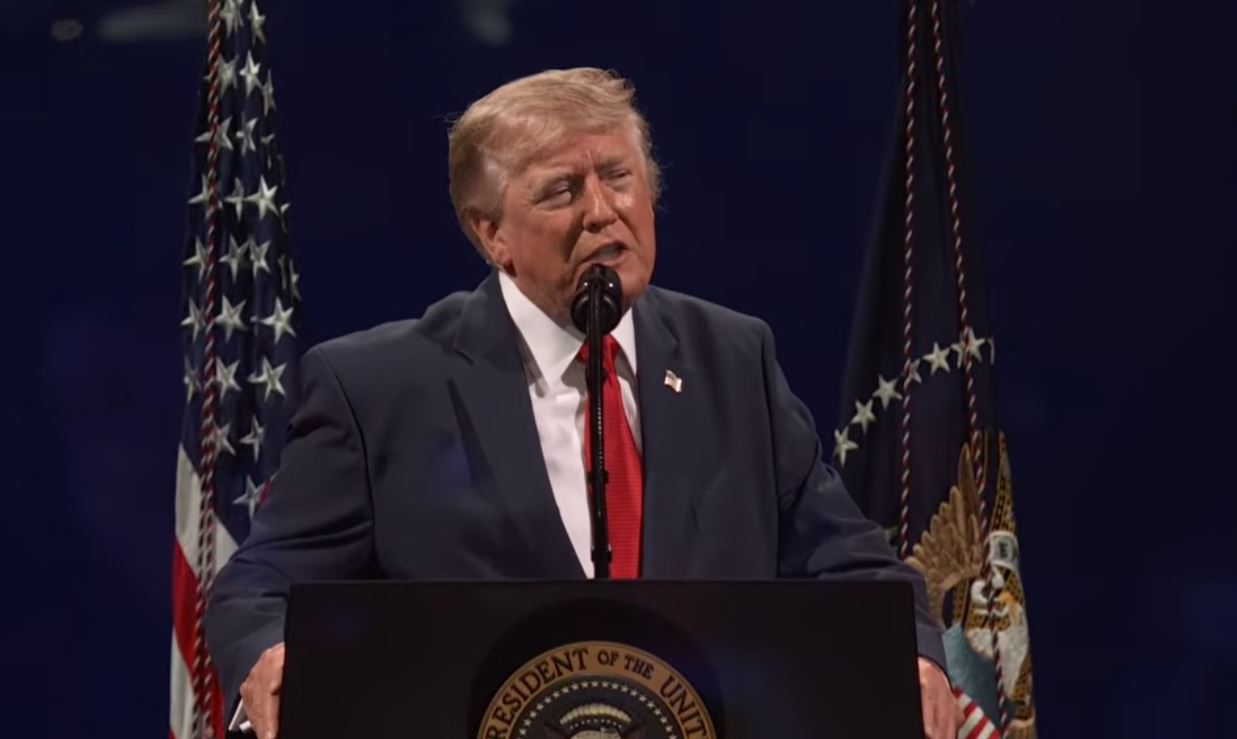
The current regional conflict in the Middle East has brought theology and American foreign policy into sharp focus, especially following President Trump’s assertion at the G7 summit that Israel would not exist right now without the United States.
For those who view Israel’s national survival purely through a lens of divine providence, this statement may be controversial, even offensive. However, if we are to honestly analyze the situation, it shows us that the physical survival of the modern state of Israel is visibly dependent on American interceptors, billions in emergency defense appropriations, and strategic vetoes at the United Nations Security Council. Acknowledging these tangible geopolitical mechanisms does not compromise biblical faith. It is an exercise in historical and current realism.
To ground this distinction in rigorous scholarship without relying on generalizations, one can look directly to the definitive texts of progressive dispensationalism. In their co-authored book, Progressive Dispensationalism, Darrell Bock and Craig Blaising explicitly dismantle the idea that any modern, secular political entity is identical to the spiritual kingdom of God.
Darrell Bock, Senior Professor of New Testament Studies at Dallas Theological Seminary, argues in his research on biblical covenants that the physical realization of covenant blessings is structurally dependent on spiritual regeneration. Bock notes that while God’s covenant with ethnic Israel remains permanent, the fulfillment of prophetic blessings requires a national spiritual turning to the Messiah. Because the current government in Jerusalem operates as a secular republic navigating a brutal regional war through standard military and political means, Bock’s framework dictates that its current political actions belong to the immediate realm of global history, not the final execution of divine kingdom promises. Therefore, a believer can support the right of the Jewish people to live securely in their homeland while completely rejecting the idea that Christians owe absolute, uncritical allegiance to a secular political state.Craig Blaising, Professor of Theology, provides further precision regarding national identities in his recent research presentations, such as his 2024 lecture on Kingdom Theology. Blaising explains that terms like Israel and Gentile are “creation terms” that refer to ethnic, national, and territorial identities within common humanity. He explicitly states that the modern state of Israel exists currently “as a nation among the nations of the earth,” meaning it operates within the same fallen, temporary political structures as any other global government.
In Blaising’s theology, national and ethnic identities do not fully align with the spiritual reality of the Church until the eschaton (the final end of history). This means the current political administration in Israel is not an infallible, spiritually complete entity, but a secular government managing a crisis.Applying the specific scholarship of Bock and Blaising to the current situation provides clear exegetical honesty. A Christian can fully maintain a dispensational view of prophecy while admitting that the modern state of Israel relies on American power to survive its current security crises. This perspective reinforces the principle that an American citizen’s civic allegiance belongs solely to the United States, allowing for a foreign policy that aids a strategic ally in a time of war without elevating that foreign nation above one’s own country.
President Trump’s statements, though controversial in some ways, do not betray any sort of theological principle, even for dispensationalists. Despite what some on the internet claim, one does not have to condemn the president’s statement on theological grounds.