
Shaking it up: Trump admin reshuffles internally, Pentagon axes generals

From Kristi Noem’s departure to Pam Bondi’s return to the private sector, there’s been a fair amount of internal reshuffling at the White House and, this week, at the Pentagon, too. What’s going on?
Opinion-Analysis by Summer Lane | April 3, 2026
President Donald Trump is no stranger to shaking things up when it comes to reshuffling teams and moving people into different positions, and if the latest developments at the White House are any indication, there may be a serious realignment taking place internally at the executive level.
Just weeks after the high-profile ouster of former Department of Homeland Security Secretary Kristi Noem (she was replaced by Oklahoma Republican Senator Markwayne Mullin), news broke this week that Attorney General Pam Bondi was also leaving the administration, to be replaced by Deputy AG Todd Blanche.
Polymarket’s odds place current FBI Director Kash Patel at a 60 percent chance of being out as the leader at his agency by June 30, too, and it seems that, amid the public’s poor perception of Patel’s performance, this could be likely.
This week, Secretary of War Pete Hegseth additionally axed Army Chief of Staff Randy George and Army General David Hodne, according to Axios, amid the ongoing turbulence of Operation Epic Fury. The high-profile resignation of the former Director of the National Counterterrorism Center, Joe Kent, just a few weeks ago, over his opposition to the war with Iran, also set tongues wagging.
What’s going on? Why all the internal restructuring? What’s happening at the White House and beyond?
Midterms are here, and voters are feeling blue
Objectively, the war against Iran is unpopular. This is not 2003, and Americans have no appetite to engage in a long, drawn-out war with another Middle Eastern country. This is a fair sentiment, and it was President Trump’s firm stance on staying away from such conflicts that got him elected in the first place: peace through strength.
According to YouGov/Economist, President Trump’s approval rating has sunk to just 35 percent, which is quite a dip when one considers the raucous popularity nationwide for his administration when he took office in 2025. What changed? Quite simply, the focus has shifted from domestic issues – immigration enforcement, affordability, and election integrity – to foreign war.
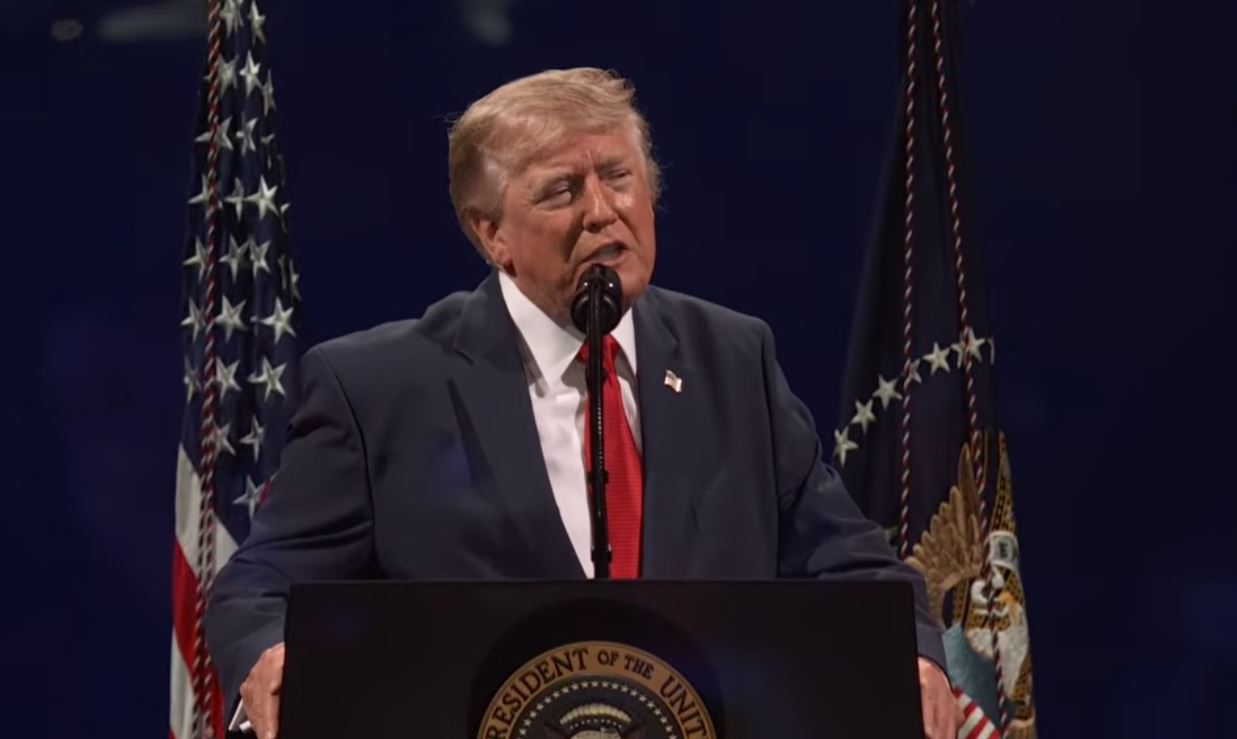
War is driving up the prices of oil and energy around the world, and it’s not going to improve until the fighting stops. And while President Trump’s recent national address looked toward winding down the war in roughly two to three weeks, it also focused heavily on threatening rhetoric toward Iran. “We’re going to bring them back to the Stone Ages, where they belong,” the president said.
This type of talk counterbalances the narrative of finding a peaceful solution, and so the markets remain highly volatile and, as the Strait of Hormuz remains unsecured, European nations and other allies are feeling the sting of dwindling oil supplies.
All of this instability shakes voters’ confidence, and fairly so.
Consider this report from TIME, written by longtime cataloguer of President Trump’s administration, Eric Cortellessa. In it, he alleges that White House Chief of Staff Susie Wiles has cautioned the president’s advisors to be much more honest with the Commander-in-Chief about the domestic impacts of this war:
“But Wiles, according to two White House sources, was concerned aides were giving the President a rose-colored view of how the war was being perceived domestically, telling Trump what he wanted to hear instead of what he needed to hear. She had urged colleagues, the officials say, to be ‘more forthright with the boss’ about the political and economic risks.”
The war will have a significant impact on voter turnout in the midterms, particularly among young voters who swung hard for President Trump in 2024.
Without the coalition leadership and genius of the late Charlie Kirk to connect with young voters, the midterms are likely to be much more difficult for Republicans, especially since they have failed to pass key America First agenda items like voter ID.
For Republicans to have any hope of holding a majority in the House – and to stop President Trump from facing an impeachment debacle – they must deliver. And, even more importantly, the war with Iran must end now.
Why the shakeup?
Internal shakeups at the highest levels of government are simply an indication that things aren’t working the way they should. “I do that all the time, I shake up teams,” President Trump said earlier this term, when commenting on his decision to send Border Czar Tom Homan into Minnesota, as then-DHS Secretary Noem’s leadership proved inadequate.
As a successful businessman, President Trump knows a thing or two about shaking things up when operations are failing to bear good fruit. A shakeup doesn’t necessarily mean something bad is happening. Often, it means that something good is happening – a problem has been identified, and a solution is being applied.
Now, the United States is watching a faraway and fiery war play out in real time. War is the last thing most people want to see – they want cheap fuel, cheap groceries, and affordable housing. It’s really that simple.
The farther away the Trump administration gets from these core, winning messages, the more impossible it will be for Republicans to triumph in the midterms in 2026. Shakeups at the White House and Pentagon, perhaps, are needed to quickly reverse course, especially with 2028 looming on the horizon.
Photo: Adobe Stock