
Save America Act amendment earns 50 votes in the Senate
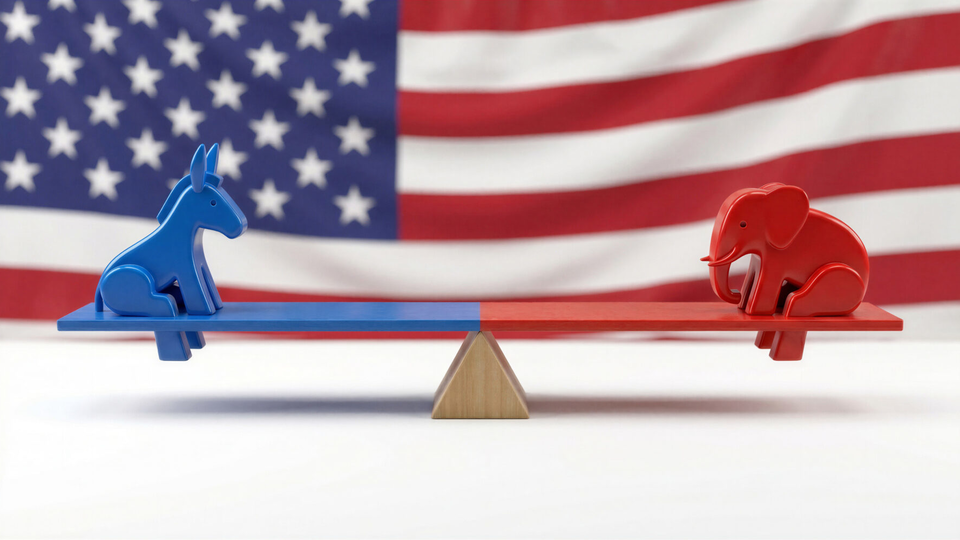
A key amendment linked to the SAVE America Act managed to garner enough votes in the U.S. Senate this week to prove that there are enough lawmakers who could support a simple majority vote on the election integrity legislation.
Analysis by Summer Lane | June 5, 2026
A key amendment for the SAVE America Act – an election-integrity bill championed by President Donald Trump and many Republicans – secured 50 votes in the U.S. Senate this week, proving the legislation is gaining traction.
In an overnight reconciliation vote-a-rama in the U.S. Senate, lawmakers cast 50 votes in favor of an amendment to the legislation presented by Sen. Mike Lee (R-Utah), proving that the broader bill could hypothetically pass on the floor with a simple majority if Vice President J.D. Vance were to cast a tie-breaking vote.
Had the SAVE America Act itself successfully been attached to this week’s budget reconciliation bill, it could have bypassed the filibuster stalemate. However, the vote to do so also failed separately in a different amendment introduced by Sen. Lindsay Graham (R-S.C.) in an earlier vote of 48-50, according to election integrity advocate Scott Presler, who has been closely monitoring the situation.
The vote on Sen. Lee’s amendment was a slightly better showing for the bill, but still failed to successfully clear a 60-vote procedural hurdle linked to the Senate’s budget rules.
To pass the SAVE America Act, many have made a case for “nuking the filibuster,” often considered a last-ditch option for ramming through legislation. What does this mean?
In the U.S. Senate, a legislative action used to terminate an endless debate on a bill is by invoking a move known as cloture. That is, at least 60 lawmakers would have to vote to end discussions on the bill, thereby limiting that debate to a matter of hours, and forcing an immediate vote on the legislation. In this hypothetical scenario, the SAVE America Act would then require only a simple majority to pass on the floor.
“Nuking” the filibuster would change the Senate’s cloture requirement to drop from a 60-vote threshold to a simple majority. The process is very complex and requires considerable pre-planning and strategy.
This week’s vote on Sen. Lee’s amendment proved that the U.S. Senate does indeed have the simple majority votes to pass the bill – but lawmakers are hesitant to “nuke” the filibuster. The hesitancy comes from the very real possibility that doing so could set the stage for extreme partisanship swings in the upper chamber as different political parties ebb and flow in the seat of power.
Sen. Lee remarked upon the votes his amendment received this week that there was hope for the legislation to pass in full.
“…That means that but for the Zombie Filibuster, the House-passed SAVE America Act would now be on its way to the White House for President Trump’s signature[,]” he wrote on X.
A “zombie filibuster” refers to the mere threat of obstruction on the floor, which can also hold legislation captive.
Another possible Republican strategy that has been floated by Rep. Chip Roy (R-Texas) is to force the Save America Act to the floor by simply allowing a quorum (simple majority) to seek a vote on the legislation and engage in a traditional “talking filibuster.” This is an old-school method that involves pure endurance: lawmakers on both sides of the debate literally argue and debate on the bill until they collapse from exhaustion, thereby moving the legislation to a vote on the floor.
“There is no need to change any Senate rules (‘nuke the filibuster’) to do this,” Roy argued earlier this year. “If Republicans stick together, and the minority exhaust their opportunities to speak in opposition or give up, a final vote on passage of the bill occurs automatically at a majority threshold.”
The amendment that was voted on this week is the “House-passed version of the Save America Act,” Sen. Lee said. The House-version amendment appears to contain both voter ID requirements in the bill, as well as proof of citizenship to register to vote, according to previous information on the House bill.
Photo: Adobe Stock