
RISE OF THE MACHINES: AI, humanoids pose existential threat to humanity
The White House – and the world – is pushing hard for the rapid integration of AI into every area of our lives. But is such a move wise? And further, is it even moral?
Opinion-editorial by Summer Lane | March 27, 2026
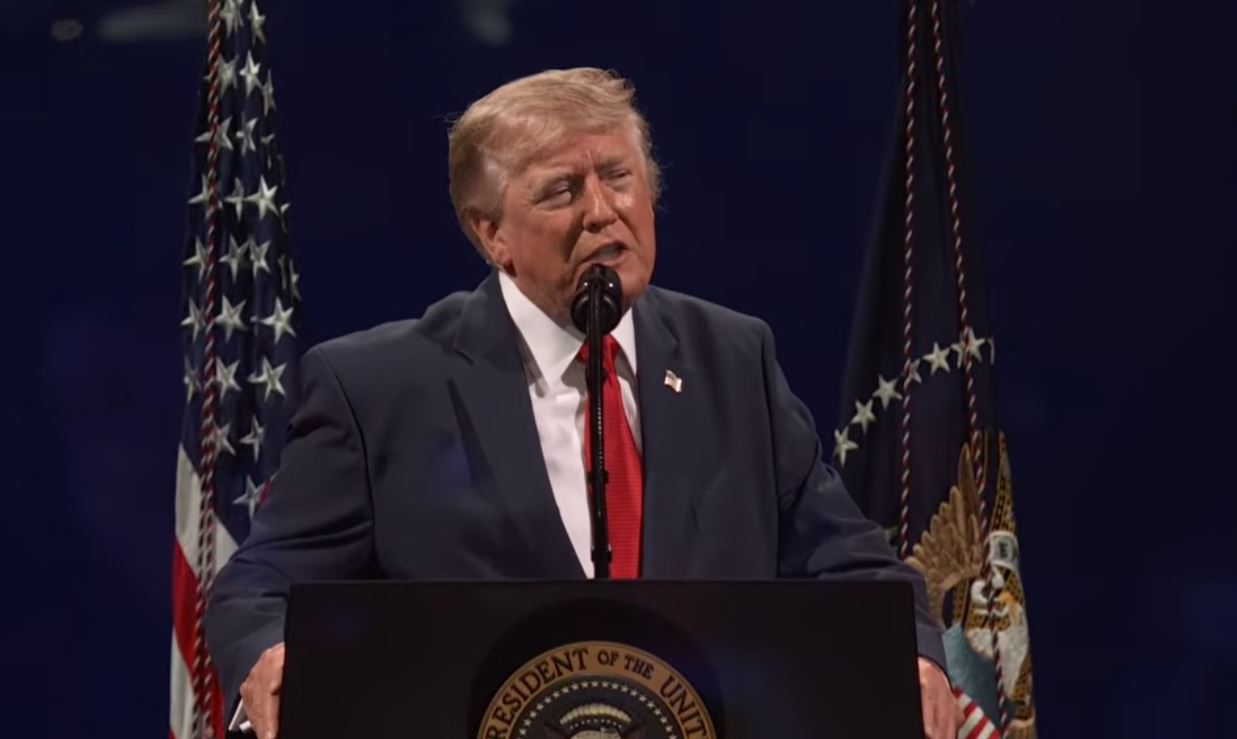
During a Fostering the Future Together event at the White House this week, First Lady Melania Trump, elegant as ever, played host to the First Spouses from 45 countries.
The conference focused heavily on the role that emerging technology will play in the education landscape of tomorrow, particularly the evolving role of artificial intelligence, or AI.
The First Lady’s entrance to the event was dramatic: she was escorted to her seat by a humanoid robot, Figure 3. Side by side they strolled, human on one side, machine on the other.
The AI-powered robot even introduced herself to the room. “Thank you, First Lady Melania Trump, for inviting me to the White House,” she said, presenting with a female voice. “…I am grateful to be part of this historic movement to empower children with technology and education.”
Figure 3 then went on to greet the room with a “hello” in multiple languages.
While this all may seem like a scene from a science-fiction film, the White House did indeed play host to a humanoid on Wednesday, and while the moment was exciting, it also sparked some criticism.
“Imagine a humanoid educator named Plato – access to the classical studies is now instantaneous,” the First Lady said during her remarks.
She continued, “Literature, science, art, philosophy, mathematics, and history; humanity’s entire corpus of information, is available in the comfort of your home. Plato will provide a personalized experience, adapted to the needs of each student. Plato is always patient and always available. Predictably, our children will develop deep critical thinking and independent reasoning abilities. The AI-powered Plato will boost analytic skills and problem-solving and adapt in real time to a student’s taste, prior knowledge, and even emotional state.”
This suggestion – that humanoid robots are on the path to replace human teachers – has naturally drawn fire, and understandably so. In a world rapidly evolving and rife with chaos, the explosion of AI technology cannot be ignored. It is poised to reshape the modern landscape in a tidal wave, for better or for worse.
A new and unknown workforce
Often, fiction is the best predictor of the future. “It was the machines, Sarah,” said Kyle Reese in the first hit Terminator film. “…Defense network computers. New…powerful…hooked into everything, trusted to run it all. They say it got smart, a new order of intelligence. Then it saw all the people as a threat, not just the ones on the other side. Decided our fate in a microsecond: extermination.”
This is no longer pie-in-the-sky fiction, reserved only for Arnold Schwarzenegger thrillers or the latest hardback novel. The future is here, and the machines are rising.
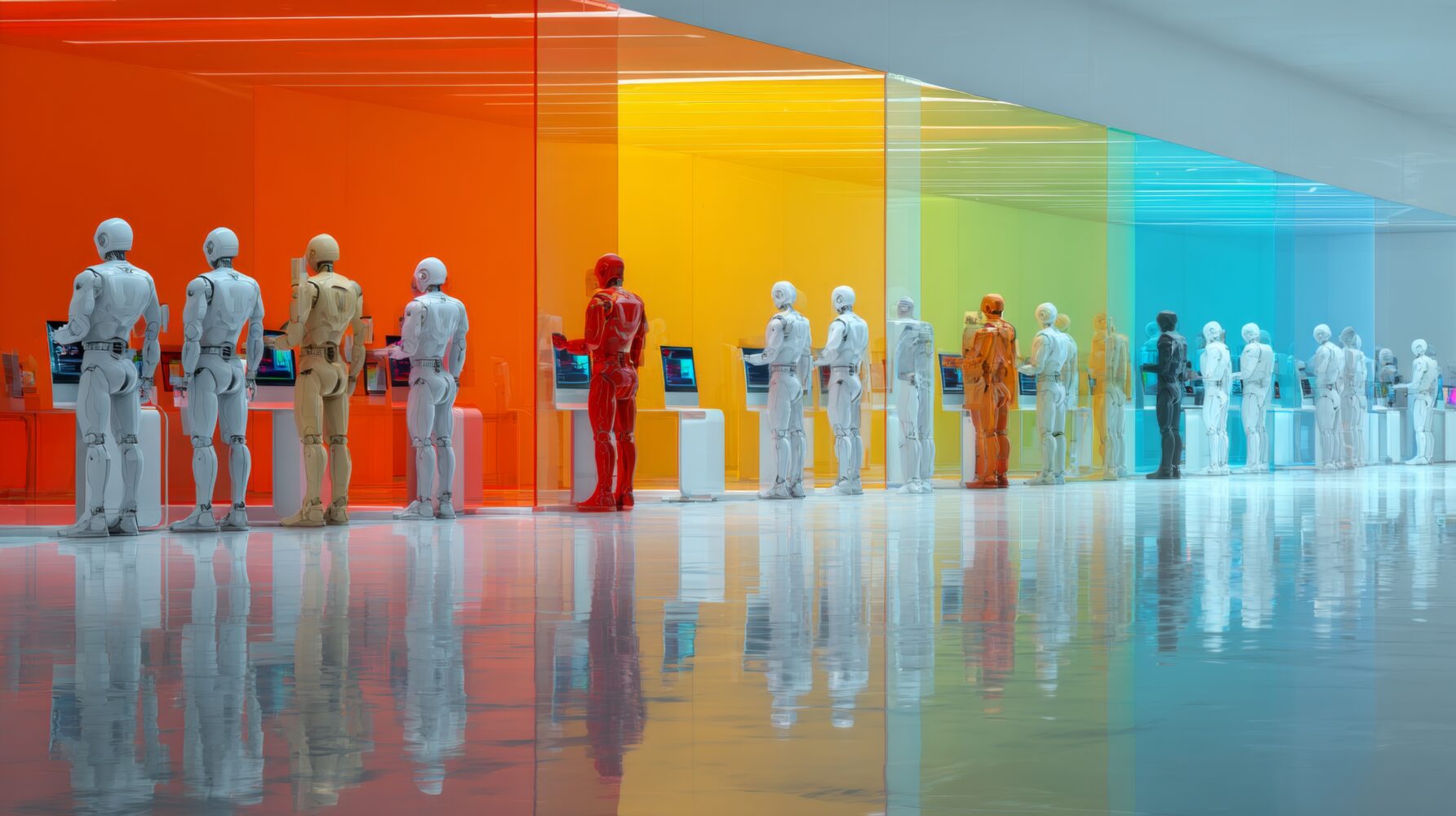
Last year, LindellTV reported that as many as 300 million people could lose their jobs to AI in the coming years. Writers, artists, songwriters, marketing experts, post-production editors, math teachers, data analysts, professors, painters, chefs, therapists, and beyond. Why hire a human when a humanoid, or an AI program, can do the job three times as fast, and at a tenth of the price?
This is a terrifying prospect. What happens when 300 million people suddenly have no job opportunities? What happens when 300 million people are displaced by robots, touch-screen kiosks, and drone delivery drivers?
Enter a chilling new reality: universal income. That is, a stipend dispensed by the federal government.
“My prediction is, in the future, working will be optional,” Tesla and SpaceX innovator Elon Musk said last year, giving such a prediction a 20-year timeline.
He explained, “The advancement in AI and robotics will bring us to the point where working is optional, in the same way that, like, say, you can grow your own vegetables in your own garden, or you can go to the store and buy vegetables.”
While innovation is certainly never a bad thing, AI is a monstrously powerful tool, and the federal government has been eager to get its hands on it, particularly the military-industrial complex.
Consider Claude, an advanced AI model created by Anthropic. After signing a contract to work with the Pentagon, Anthropic CEO Dario Amodei reversed course, claiming that military leaders were utilizing the advanced tech to develop mass domestic surveillance programs and fully autonomous weapons.
The Pentagon has denied those allegations, but really – is it that far-fetched? No. There have been serious questions regarding the use of AI in military operations, particularly as the United States is engaged in a kinetic conflict with Iran.
A catastrophic U.S. missile strike in Iran hit the Shajareh Tayyebeh primary school in southern Iran on the first day of Operation Epic Fury, killing up to 180 people – almost all of them, little girls, between the ages of 7 and 12, according to The Guardian.
How could this have happened? The U.S. military has never targeted civilians, let alone children, in the past. This was a mistake. A horrible one. An unthinkable act. It had to be.
It’s no surprise that amid the investigation into how this tragedy happened, critics have strongly suggested that AI could have been involved in the targeting process. High-profile independent journalist Tucker Carlson – who has attracted controversy from all sides of the aisle, it seems – suggested early in the conflict that the bombing of the primary school could have been the result of an autonomous AI program.
There’s no clear evidence of this, but still – AI’s very presence in the military and in our federal systems immediately sparks suspicion, as it should. AI is still a wild card. It’s unpredictable, unperfected, and potentially much more powerful than anyone wants to admit.
AI will create a gray and singular culture
With the advent of AI, culture, art, music, and the elements that make countries and societies exceptional will be erased. AI gathers this information and streamlines it into a singularity, globalizing the landscape, linking the entire world, and repainting it into one image.
What then? Despair. Discontent. Unrest.
Man was created by God to work (Gen. 2:15, Eccl. 3:12-13, 2 Thes. 3:10, etc.). Removing labor from a man’s life is dangerous indeed. It takes away purpose, clarity, and incentive. It creates a society of chaos.
“Shape without form, shade without colour,” writes T.S. Eliot in his famous poem, The Hollow Men. “Paralysed force, gesture without motion.”
Those words seem especially applicable to what AI may do to humanity.
Is there a way to stop such a decline? Is there a way to harness this monster and contain it, ensuring it’s used only for good?
Only God knows.
See Part Two of this editorial, releasing Monday, March 30, here on LindellTV.
Photo: Adobe Stock