
‘Juneteenth’ became a federal holiday under Joe Biden – here’s what it means
In 2021, then-President Joe Biden signed the Juneteenth National Independence Day Act into law. Here’s what the roots of the holiday mean.
Analysis by Summer Lane | June 19, 2026
Juneteenth is a relatively new federal holiday, and for many Americans, it’s a bit of an enigma.
What is the holiday? Where does it originate? And why was it signed into law as a federal observance in 2021?
The historical roots of the holiday
Former President Joe Biden signed a law in 2021 that made Juneteenth – June 19th – a federal holiday. The action was considered somewhat controversial at the time, if only because it came hot on the heels of broad civil and racial unrest in the United States, following the George Floyd-fueled riots of 2020 and rising anti-law enforcement sentiment fomented by radical leftists and much of the Democrat party.
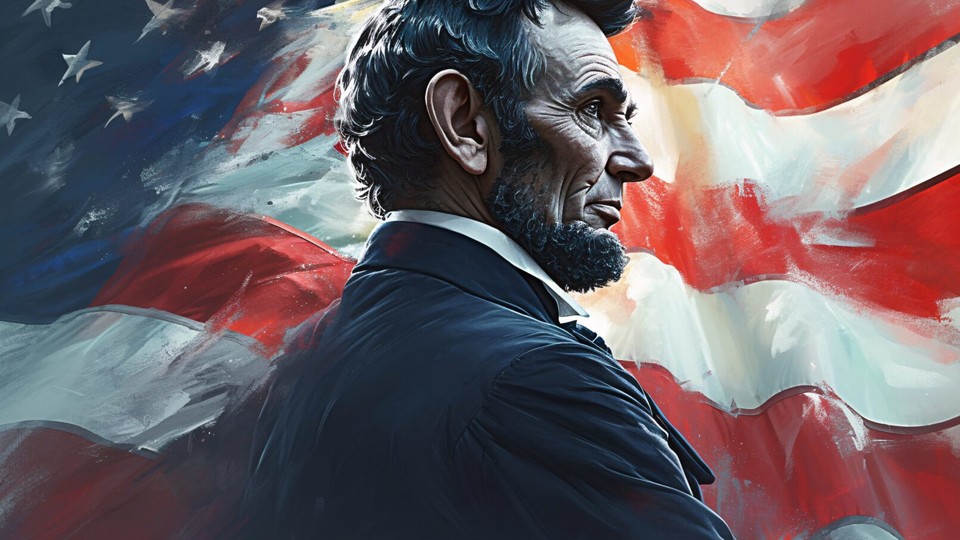
What is Juneteenth? It is an observance of June 19th, 1865, when Union soldiers rolled into Galveston, Texas, to proclaim that the Civil War had come to an end, and that enslaved Americans had been freed via President Abraham Lincoln’s Emancipation Proclamation.
The proclamation had been signed in 1863. The message of slave emancipation was quite a delayed development for those Texans who were somewhat geographically isolated from the rest of the country at that time. The news sparked celebration for Texas slaves.
Per History.com, later that year, slavery was formally abolished via the 13th Amendment.
Juneteenth celebrations among slaves originated as an exclusively Texan phenomenon that was carried forward by the Black community in America as decades passed. It is sometimes a bit controversially referred to as a “Second Independence Day.”
Biden signs Juneteenth into law, some object
Juneteenth sometimes draws debate because it is a separate celebration from the unified Independence Day celebration on July 4. This separation is seen by some as a mechanism for creating a divide between Black Americans and the rest of the country.
For example, in 2021, when lawmakers were debating the law that would make Juneteenth an official holiday (Juneteenth National Independence Day Act), 14 House Republicans voted against the bill, per KPBS.
“I fully support creating a day to celebrate the abolition of slavery, a dark portion of our nation’s history,” said Rep. Thomas Massie, R-Ky., at the time, via the outlet. “However, naming this day ‘National Independence Day’ will create confusion and push Americans to pick one of those two days as their independence day based on their racial identity.”
He continued, “Why can’t we name this Emancipation Day, and come together as Americans, and celebrate that day together as Americans: Black and white, all colors, all races, all ethnicities, and then come together on Independence Day, which celebrates the creation of our country throwing off an oppressive government.”
Rep. Paul Gosar, R-Ariz., argued in a statement that year that Juneteenth was simply an extension of the racially-charged tenets of critical race theory.
“Juneteenth is more debunked Critical Race Theory in action,” he said. “I reject racism. I reject the racial division people are promoting. I voted no because this proposed holiday does not bring us together, it tears us apart.”
Critical race theory is rooted in the belief that equity is necessary to reconcile racial imbalances. Equity strives to guarantee equal results, while equality simply guarantees an equal shot at playing the game. The ideological consequences are profound. Equity is a pointedly Marxist concept, while equality is a uniquely American one.
The original concept of proclaiming a separate “Independence Day” for Black Americans is an example of CRT’s equity-based approach to politics – instead of creating equality for all, it creates an equitable alternative. But in the end, it seems to only cause more division as perceived marginalized groups retreat further into themselves rather than integrating into the broader society.
In all fairness, “Juneteenth” is indeed a much less controversial title for the holiday, as it doesn’t clash with the most important celebration for America: The Independence Day holiday that commemorates the birth of the nation in 1776 – the date that set in motion the freedom of all Americans, regardless of race.
History in motion
Whether one agrees with the federalization of Juneteenth as a holiday or not, there are a few hallmarks of the celebration that are interesting. According to the National Parks Service, Juneteenth is often celebrated among Black communities with gusto, including a special emphasis on foods like watermelon, strawberry soda, and red foods, which are rooted in African tradition.
The emancipation of slaves in the United States was quite an accomplishment for such a young nation. Before the U.S. was even a century old, it not only fought a bloody civil war, but it also managed to eradicate slavery – a traditional source of human labor that had existed in nearly every culture for thousands of years.
America managed to do in just one century what many other countries never managed to do. And that, regardless of race or political affiliation, is worth celebrating.
“That on the first day of January, in the year of our Lord one thousand eight hundred and sixty-three, all persons held as slaves within any State or designated part of a State, the people whereof shall then be in rebellion against the United States, shall be then, thenceforward, and forever, free; and the Executive government of the United States, including the military and naval authority thereof, will recognize and maintain the freedom of such persons, and all persons held as slaves within any State or will do no act or acts to repress such persons, or any of them, in any efforts they may make for their actual freedom.”
– An excerpt from President Abraham Lincoln’s Emancipation Proclamation
Photo: Adobe Stock