
If SCOTUS strikes down tariffs, refunds would be a nightmare
If the Supreme Court rules against President Trump’s use of tariffs, it could spark an accounting nightmare – and it could end U.S. trade leverage
Analysis by Summer Lane | January 12, 2026
The United States has raked in a shockingly high amount of cash over the past year, thanks to President Trump’s savvy trade policies and the use of one key negotiating tool: tariffs.
Long forgotten by most presidents, President Trump has homed in on the strategy used by former President William McKinley, utilizing the power of tariffs as leverage when negotiating with foreign countries on issues of trade.
The nation has raked in at least $195 billion in less than a year following the implementation of the president’s tariff policies, which have been enacted through the Emergency Economic Powers Act.
The president’s use of this act is what’s up for debate at the Supreme Court, and while the justices declined to issue an opinion on the subject last week (a scheduled opinion day), a decision is expected any time this term.
What the president says about it
The president has repeatedly stated that a ruling against tariff authority at the Supreme Court would be bad news for the United States. Why? He has alluded to the difficulty of doling out potential refunds to countries that have already shelled out billions to the U.S. in tariffs.
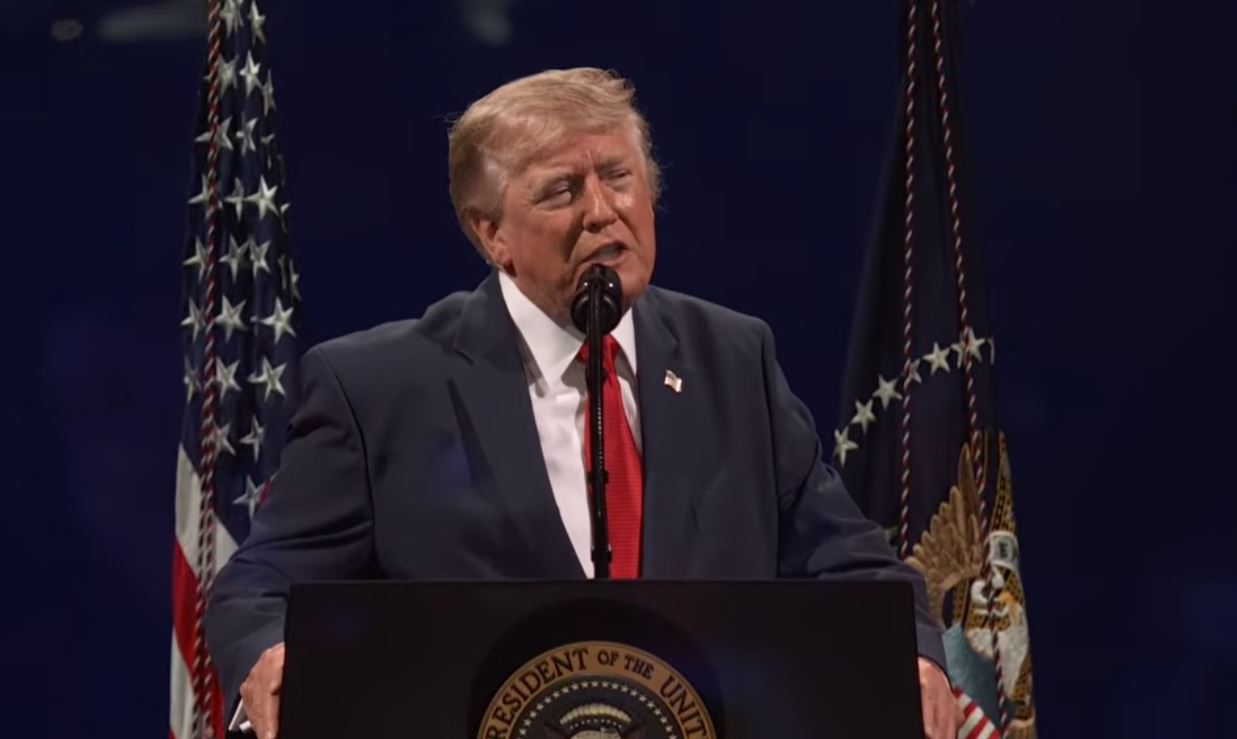
“The actual numbers that we would have to pay back if, for any reason, the Supreme Court were to rule against the United States of America on Tariffs, would be many Hundreds of Billions of Dollars, and that doesn’t include the amount of ‘payback’ that Countries and Companies would require for the Investments they are making on building Plants, Factories, and Equipment, for the purpose of being able to avoid the payment of Tariffs,” President Trump argued on Truth Social on Monday.
He said that this money, when coupled with the investments in such equipment and beyond, would amount to “trillions” of dollars.
“It would be a complete mess, and almost impossible for our Country to pay,” he remarked.
Indeed, the prospect of refunding these payments seems like a nightmare, and the justices at the Supreme Court are well aware of the monstrosity it could create.
During oral arguments last fall, Justice Amy Coney Barrett brought this topic up, noting that it “seems to me like it could be a mess.”
It seems that, even if the Supreme Court were to strike down the president’s use of the Emergency Economic Powers Act, it would be more likely that it would simply affect future negotiations. To demand refunds for already-implemented and complete trade transactions seems impossible – and ridiculous.
What the experts say
President Trump has certainly faced an uphill battle when it comes to convincing top economists and talking heads that tariffs could be the key to generational, nationwide wealth for Americans.
Moody’s Analytics Chief Economist Mark Zandi argued on Monday that he believed the U.S. job market was struggling mostly due to tariffs.
“This reflects the direct effects of the tariffs on manufacturing, transportation and distribution, and ag-related businesses, which are steadily losing jobs, as well as the indirect uncertainty hit to hiring by most other businesses,” he said on X.
He acknowledged “other factors” at play in the economy, including strict immigration policies and the emerging threat of AI on the job market. Nevertheless, he noted that the “fastest way to boost the job market would be for the Supreme Court to declare the reciprocal tariffs unlawful and for lawmakers to let them become a thing of the past.”
And yet, despite some economists’ jitters on the subject of tariffs, the president has been resolutely positive that there are far more boons than losses when it comes to utilizing them.
It is also worth mentioning that while there may be turbulence in the markets from time to time, the United States was not taking in revenue like this before the implementation of tariffs. In fact, the U.S. has done little more than accrue massive, trillion-dollar debt loads for the past several decades.
Tariffs, at least, were beginning to offset the damage done by money-guzzling lawmakers and billion-dollar foreign aid machines.
While it is unclear what the Supreme Court will do about the president’s tariffs, they may issue an opinion that partially upholds his authority to negotiate as the nation’s top executive and therefore use tariffs as a tool in that regard.
If they rule against him, the U.S. will stop bringing in record-breaking revenue, and America will no longer have the extra leverage it has enjoyed under President Trump to force nations to the negotiating table.
It would certainly be a blow to the president’s administration, but the story isn’t over yet.
“Remember, when America shines brightly, the World shines brightly,” President Trump said this week. “In other words, if the Supreme Court rules against the United States of America on this National Security bonanza, WE’RE SCREWED!”
Photo: Adobe Stock